
On-Site vs. Remote Interpreting: Which Do You Need?
Professional interpreting comes in three main forms - on-site, video remote (VRI), and over-the-phone (OPI) - and choosing the right one is mostly about the setting, the stakes, and how much notice you have.
When on-site is worth it
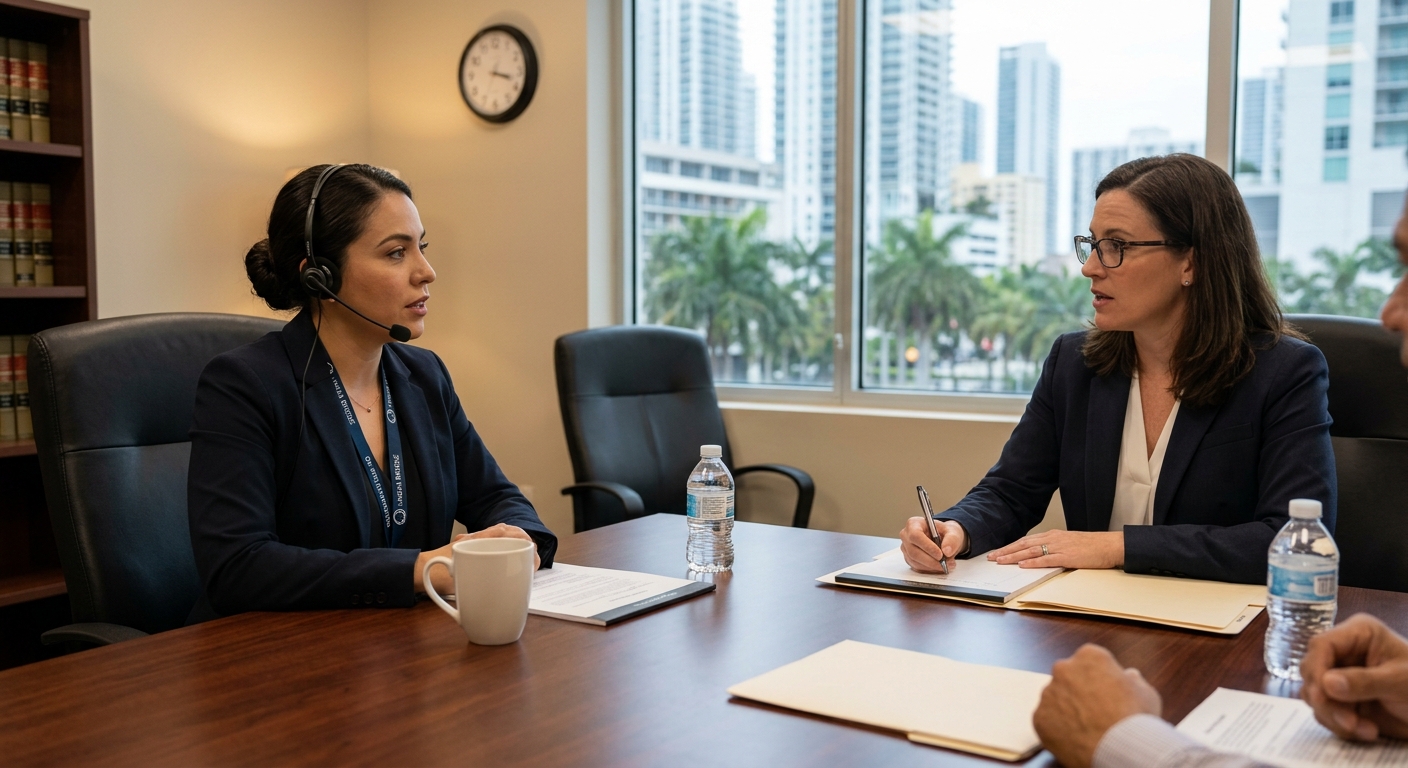
For depositions, court hearings, high-stakes negotiations, and sensitive medical consultations, an in-person interpreter is usually the right call. Being in the room lets the interpreter read body language, manage turn-taking, and handle documents and exhibits - nuances that matter when the outcome is serious. Our on-site interpreters cover Miami-Dade, Broward, and Palm Beach counties.
When remote is the better choice
Video remote interpreting shines when you need a qualified interpreter quickly or in a less common language. A hospital admitting a patient at 2 a.m., a clinic seeing dozens of languages in a week, or a call center handling inbound support cannot wait for someone to travel. VRI keeps the visual cues that help accuracy; OPI is fastest of all when a phone is all that is available. Both are available 24/7 in over 100 languages.
A simple rule of thumb
Match the format to the risk and the schedule: reserve on-site interpreters for planned, high-stakes, in-person events, and lean on remote interpreting for speed, coverage, and around-the-clock access. If you are not sure, tell us the date, language pair, and setting, and we will recommend the format that fits - and staff it with a credentialed interpreter either way.
